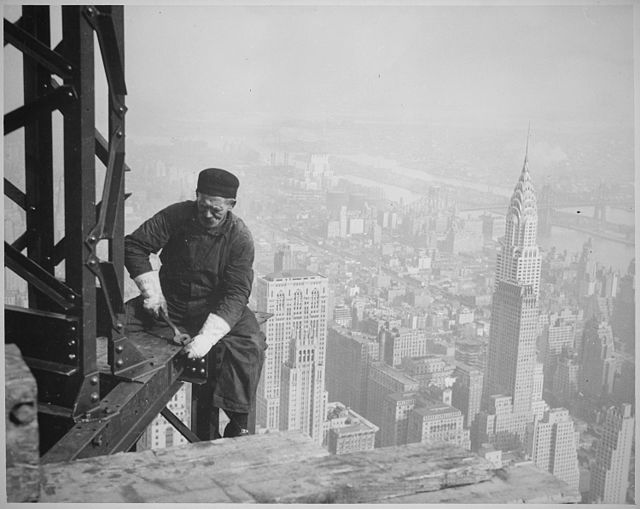
Empire State Building construction worker, 1930
New York City, 1930
The most ambitious building ever attempted.
At the height of the Great Depression, 3,400 workers reported to 34th Street every morning. Carpenters. Bricklayers. Riveters. Ironworkers. They raised 4.5 floors a week. The Empire State Building went up in 410 days.
Lewis Wickes Hine, 1930 — Public domain, US National Archives
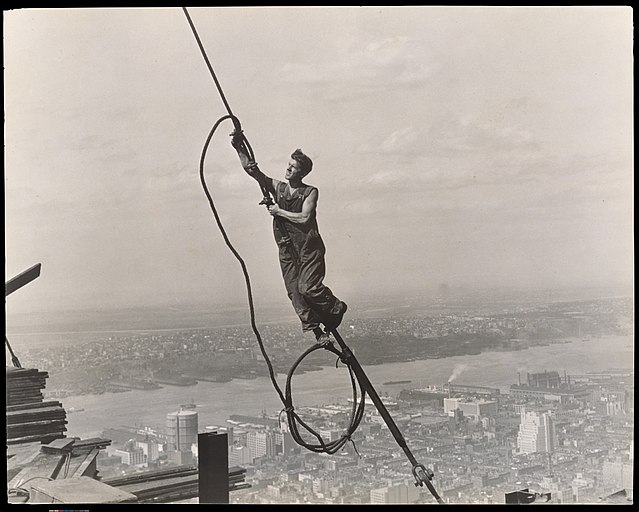
Icarus, Empire State Building - Lewis Hine
The sky boys
They built it.
No harnesses. No hard hats. $15 a day. Photographer Lewis Hine called them Icarus — men who worked as if they could touch the sky. He photographed them from beams suspended a thousand feet above Fifth Avenue.
Lewis Wickes Hine, "Icarus," 1930–31 — Public domain, The Metropolitan Museum of Art
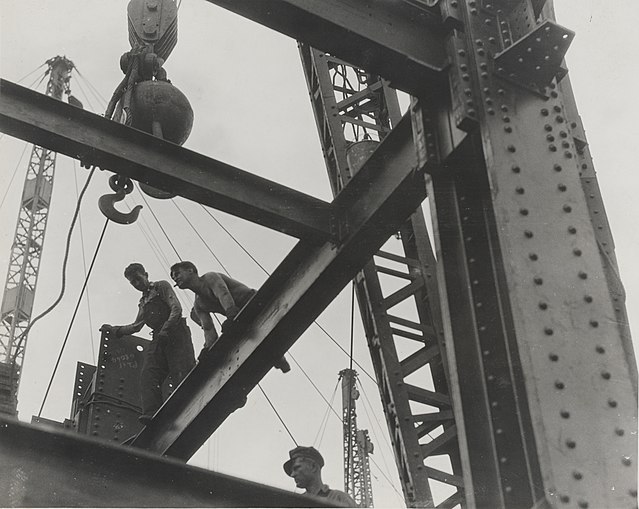
Workers on girders Empire State Building - Lewis Hine
Inside the steel
Every rivet. Every beam. Every day.
Irish immigrants. Italian laborers. Mohawk ironworkers from Canada. Two twelve-hour shifts. No safety harnesses. No hard hats. The crane moved the steel. Their hands put it in place.
Lewis Wickes Hine, 1930 — Public domain, Preus Museum Norway
Raising the Mast Empire State Building - Lewis Hine
The other side of the ledger
They owned none of it.
410 days. The tallest building in the world. The men who financed it never set foot on those beams. The workers went home with their day rate. The investors collected for the next half century. The work and the ownership were never in the same hands.
Lewis Wickes Hine, 1931 — Public domain, US National Archives
1930 → 2026
That gap
closes here.
Your retirement savings are sitting in an account earning 1–2%. You know this work. You've spent your career building exactly these kinds of projects across the NY metro market.
For the first time, there is a way for working people to own a piece of what they build — and get paid as it pays.
CWCI Inc. · Commercial interiors. Union labor. Built to pay the people who build it.